


Compare Health Insurance Plans Online – Premiums, Coverage & Benefits
Health insurance protects you and your family by covering medical expenses through affordable premiums, ensuring access to quality healthcare without financial stress.

What is Health Insurance
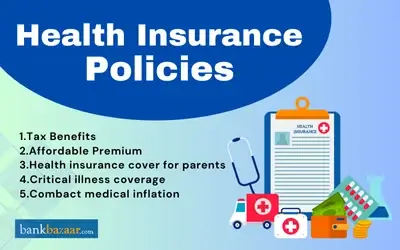
To put it simply, purchasing health insurance provides you with up to a set level of financial coverage for any medical costs you may incur over the course of a year. It pays for planned and emergency hospital stays, daycare services, surgeries, pre- and post-hospital stays, and ambulance fees. Therefore, having the appropriate health insurance plan protects you from needless financial hardship in the event of a medical emergency.
Why Purchase Health Insurance Plans Online?
There are various advantages to purchasing health insurance coverage online. Check them out below:
- Easier to Compare policies: To make an informed choice, it is simpler to compare health insurance policies from several insurers online
- More Convenient: Purchasing the coverage online eliminates the need to visit the insurance company's branch or schedule a meeting with an agent, making it more convenient
- Online Discounts: If you purchase the policy online, you can receive a premium discount
- Reduced Premiums: Due to insurance companies' significant operating cost savings, health policies are offered online at a reduced rate
- Minimal Paperwork: Purchasing a health insurance coverage online requires little to no paperwork
- Policy Available 24x7: Unlike offline purchases, health insurance policies can be purchased online at any time of day, including on public holidays
- Digital Payment Options: You can safely pay the premium online by using digital payment methods instead of cash
- Time Saving: Since the policy is issued a few minutes after purchase, you save a significant amount of time.
Best Health Insurance Companies Offering Online Plans
Listed below in the table are some of the top insurance companies offering health insurance policies. The table comprises of Sum Insured, Network Hospitals, and Key Benefits.
Insurer | Claim Settlement Ratio | Network Hospitals |
Reliance Health Insurance | 86.38% | More than 10,500 |
SBI Health Insurance | 96.13% | More than 6,000 |
Manipal Cigna | 87.68% | More than 8,500 |
Digit Insurance | 97.00% | More than 9,000 |
Star Health | 83.00% | More than 14,000 |
TATA AIG | 94.51% | More than 11,000 |
Niva Bupa | 92.39% | More than 10,000 |
Care Insurance | 96.74% | More than 11,400 |
Aditya Birla | 95.88% | More than 12,000 |
HDFC Ergo | 97.45% | More than 15,000 |
Types of Health Insurance Plans – A Comparison
Mentioned below are the different types of health insurance plans you can choose to meet your specific requirements:
- Individual Health Insurance
- Family Floater Health Insurance
- Senior Citizen Health Insurance
- Critical Illness Health Insurance
- Maternity Health Insurance
- Group Health Insurance
- Preventive Healthcare
- Personal Accident Insurance
Documents Needed for Buying Health Insurance Plans
The following are the documents you will require to purchase health insurance in India:
- Proof of identity: Aadhaar card, PAN Card, Voter’s ID, Passport, Driving license, Passport-sized photographs
- Age proof: Birth Certificate, Passport, 10th or 12th class marks card, Voter’s ID, PAN Card, Aadhaar card, Driving license
- Proof of residence: Telephone bill, Passport, Electricity Bill, Driving license, Ration Card, Voter’s ID, Aadhaar card
- Passport-size photographs: Recent passport-size photographs are required to apply for health insurance.
Certain health insurance companies will require applicants to undergo medical examinations in order to qualify for coverage. Also, insurers can also request other documents apart from the ones mentioned above.
Eligibility Criteria to Buy Health Insurance Plans Online
The common eligibility criteria for Health Insurance in India are as follows:
Criteria | Specifications |
Age | 18 years |
Pre-Existing Conditions | Required above the age of 45 years |
Nationality | Only citizens or legal residents may be eligible for certain types of health insurance. |
Inclusions and Exclusions in Health Insurance Plans Online
Inclusions | Exclusions |
In-patient Hospitalisation Expenses | Claims within the initial 30 days of purchasing the policy, unless due to accidental emergencies |
Pre-existing Illnesses or Diseases | Coverage for pre-existing diseases usually requires a waiting period of 2 to 4 years |
Pre and Post-Hospitalisation Expenses | Critical illness coverage often involves a waiting period of 90 days |
Ambulance Charges | Injuries resulting from war, terrorism, or nuclear activities |
Maternity Cover | Self-inflicted injuries or attempted suicides |
Preventive Health Check-ups | Terminal illnesses, AIDS, and similar diseases |
Daycare Procedures | Cosmetic or plastic surgery, hormone replacement surgery, and related procedures |
Home Treatment Cover | Expenses for dental or eye surgeries |
Ayurveda, Unani, Siddha, or Homeopathy treatments | Charges for bed rest, hospitalisation, rehabilitation, and common illnesses |
Mental Healthcare Cover | Claims arising from injuries during adventure sports |
Note: It's advisable to review your policy documents for a comprehensive list of inclusions and exclusions.
Factors to Consider Before Buying Health Insurance Plans Online
Here are the key factors you should carefully consider before purchasing a health insurance plan:
- Scope of Coverage: Evaluate the coverage, including benefits like hospitalization expenses, COVID coverage, and maternity benefits.
- Adequate Sum Insured: Opt for a policy with sufficient coverage, considering inflation and choosing a sum insured of at least Rs. 10 lakh, up to Rs. 1 crore.
- Policy Type: Select from individual, family floater, or critical illness plans, and consider top-up options for additional coverage.
- Waiting Period Clause: Understand waiting periods for pre-existing conditions and specific illnesses to avoid unexpected delays in coverage.
- Co-payment Clause: Assess policies with co-payment clauses, balancing reduced premiums with potential out-of-pocket expenses.
- Room Rent Sub-limits: Be aware of sub-limits, such as room rent restrictions. Ensure the plan has minimal sub-limits to avoid paying extra for medical expenses.
- Network of Cashless Hospitals: Confirm the availability of cashless hospitals in the insurer's network for convenient claims processing.
- Lifelong Renewability Option: Choose a plan with a lifetime renewal option for continuous coverage, as medical insurance policies are usually renewed annually.
- Premium Loading Factor: Watch for premium loading, especially for senior citizen plans, and choose options without additional charges.
- Claim Settlement Ratio: Consider the insurer's claim settlement ratio above 80% for reliable service.
Check - For Future Generali Health Insurance Hospicash Hospital Cash Plan
How to Claim Health Insurance Plans Online for Planned Hospitalization?
- Notify the insurer at least 48 hours before the treatment for planned hospitalisation.
- Upon receiving approval from the TPA, file reimbursement and cashless claims by submitting the claim form.
- Provide additional documents such as medical bills, reports, discharge summaries, etc.
- Once approved, the insurer reimburses the claim amount for reimbursement claims.
- For cashless claims, the insurer directly settles the hospital bill.
How to Claim Health Insurance Plans Online for Emergency Hospitalization?
- Alert the insurer within 24 hours of hospitalisation for emergency cases.
- Present your health card at the hospital.
- Submit a pre-authorisation form for TPA approval in emergency cases to facilitate cashless claims.
- If approved, the insurer directly settles the claim with the network hospital.
- In case TPA approval isn't obtained, reimbursement can be filed subsequently.
- Provide all necessary documents like hospital bills, discharge summaries, etc.
- The claim amount will be disbursed to you.
How to Calculate Health Insurance Premiums?
The cost of health insurance can vary depending on a number of variables, including your own medical history, your family's medical history, the amount insured, cumulative bonuses, and other considerations. You may want to calculate your premium based on it to ascertain how much the insurance would cost.
To achieve it, utilize a health insurance premium calculator. The preferred sum covered, the insured's age, and other details are entered into a premium calculator, an online tool that determines the necessary premium depending on the information you provide.
What are the Factors Affecting Your Health Insurance Premium?
Based on a combination of various factors, your health insurance premium is defined by the following:
- Age - Younger individuals generally pay lower premiums due to lower health risks and longer waiting periods for specific illnesses.
- Lifestyle - Health insurance costs may vary based on lifestyle choices such as smoking, as lifestyle-related illnesses contribute significantly to healthcare expenses.
- Occupation: The field of work and the type of risks an individual gets exposed to can affect the premium charges. If the policyholder works a more risk-prone job, the premium will be higher.
- Pre-existing diseases or conditions - Individuals with pre-existing diseases or family history of specific conditions may face higher premiums due to increased risk.
- Location - The city of residence impacts premiums, with areas facing higher pollution or distinct health risks potentially leading to higher costs.
- Policy Tenure: Insurance policies with a longer tenure would have a lower premium, and vice versa.
- Additional Covers - Customizing your plan with additional benefits like maternity coverage or alternative therapy benefits can increase premiums slightly to accommodate added coverage.
GST Implications on Buying Health Insurance Plans Online for NRIs
Confirm that you hold the status of a Non-Resident Indian (NRI). This is a fundamental requirement for eligibility. Choose a health insurance plan that aligns with your needs. Ensure that the plan is eligible for GST refunds.
To secure a Goods and Services Tax (GST) refund on health insurance policies as a Non-Resident Indian (NRI), follow the process mentioned below:
- Make sure that the payment of health insurance premiums is done on an annual basis.
- Use funds from a Non-Resident External (NRE) Account for premium payments, demonstrating that the funds originate from external sources.
- Gather essential documents, including standard KYC (Know Your Customer) documents.
- Depending on the insurer, additional documents may be required, such as a Tax Residency Certificate (TRC), International Address Proof, Passport, PAN Card, and a recent photograph.
- Submit all the required documents to your chosen insurance provider for verification.
- The insurance provider will verify the submitted documents and process the issuance of the policy.
- The GST refund process typically takes around 15 days after the issuance of the policy.
- During the policy acquisition process, select the GST refund option to ensure eligibility for the refund. Adhere to any specific requirements set by the insurance company regarding documentation and procedures for GST refund.
Key Benefits of Buying Health Insurance Plans Online
The following are the main benefits of being covered by a health insurance policy:
Cashless Treatment: When you are covered under a health insurance policy, you can avail cashless treatments which essentially means that you can receive medical treatments without having to pay the hospital from your own pockets.
Cover for Pre & Post-Hospitalisation Expenses: Effective insurance policies offer coverage for pre- as well as post-hospitalisation expenses for a period of 60 days before and after an insured individual is hospitalised.
Transportation Expenses: In case you hold a health insurance policy and get hospitalised the plan will cover the costs incurred on using an ambulance to transport you from your home to the hospital or vice-versa.
Domiciliary Expenses: If the policy holder is too sick to be moved to the hospital, treatment would be provided at home. In such cases, expenses will be covered by the insurance company as per policy terms.
Ambulance Charges: All expenses related to transporting the patient to or from the hospital will be covered by the insurance policy.
Covers Day Care Procedure: Most health insurance offers daycare expense coverage to policyholders.
Medical Check-ups: Most health insurance policies offer free health check-ups. However, most insurance companies only offer these check-ups for free depending on your No Claim Bonus.
No Claim Bonus: If you hold a health insurance policy and do not make any claims over the course of an entire policy year, you will be rewarded in the form of a No Claim Bonus.
Room Rent: In case you are hospitalised, you will have to incur costs on room rent. Having a health insurance policy will ensure that these costs are covered to a significant extent.
Tax Benefits: Tax advantages can also come from having health insurance. Under Section 80D of the Income Tax Act, you are entitled to a tax deduction for the premium payments you make toward your health insurance plan.
Online Purchasing Facility: You can now acquire a plan online without going to a health insurance company branch thanks to technological improvements. From the convenience of your home or workplace, you can accomplish this.
Renewal: The renewal of your health insurance policy can also be done online. There is also a lot of flexibility when it comes to renewing your insurance plan. You can alter the terms of coverage based on what you think will work best for you.
Cover for OPD Expenses: Most of the traditional health insurance plans require the insured individual to be hospitalised for a minimum of 24 hours if they are to be eligible for reimbursements.
Mistakes to Avoid When Buying Health Insurance Plans Online
The following are the common mistakes you must avoid when purchasing health insurance:
- Inadequate Cover - Opting for insufficient coverage to save money can lead to higher costs in the long run. Ensure your policy adequately covers your needs.
- Not Checking the Claim Settlement Ratio: When you are buying an insurance plan, it is imperative to check the claim settlement ratio of the company. If the claim settlement ratio is high, you are unlikely to encounter any issues with filing a claim.
- Not Considering Additional Benefits: While buying an insurance plan, it is important to pay attention to the additional benefits it offers. Added benefits, such as wellness programmes and checkups can add more value to your policy.
- Missing the Fine Print -Review the fine print to understand coverage details and exclusions, preventing surprises when making claims.
- Comparison of Insurers - Compare multiple insurance plans to find the one that best fits your requirements instead of settling for the first option.
- Falsified Medical History - Providing accurate medical history prevents claim rejection and ensures smooth processing.
- Cashless Hospital - Prioritize insurers offering cashless facilities for prompt medical attention during emergencies.
- Careful Selection of Premiums and Co-pays - Choose premiums and co-pays wisely to balance affordability and coverage without compromising on benefits.
- Choosing Too Many Additional Riders -While additional riders can enhance protection, select only those that are necessary and beneficial for you and your family.
Not Checking the Claim Settlement Ratio: When you are buying an insurance plan, it is imperative to check the claim settlement ratio of the company. If the claim settlement ratio is high, you are unlikely to encounter any issues with filing a claim.
Not Considering Additional Benefits: While buying an insurance plan, it is important to pay attention to the additional benefits it offers. Added benefits, such as wellness programmes and checkups can add more value to your policy.
Not Checking the Claim Settlement Ratio: When you are buying an insurance plan, it is imperative to check the claim settlement ratio of the company. If the claim settlement ratio is high, you are unlikely to encounter any issues with filing a claim.
Not Considering Additional Benefits: While buying an insurance plan, it is important to pay attention to the additional benefits it offers. Added benefits, such as wellness programmes and checkups can add more value to your policy.
What are the Benefits of Purchasing Health Insurance Plans Online?
Acquiring a health insurance policy through online channels offers numerous advantages. Explore these benefits:
- Simplified Plan Comparison: Online platforms such as Policybazaar.com make it effortless to compare health insurance plans from various insurers, aiding you in making an informed choice.
- Enhanced Convenience: Online policy purchase eliminates the need to physically visit insurance company branches or schedule meetings with agents, offering greater convenience.
- Exclusive Online Discounts: Opting for online purchases can lead to premium discounts, adding value to your policy.
- Reduced Premiums: Online health plans often feature lower premiums, thanks to the cost savings insurance companies experience in their operations.
- Minimal Paperwork: The online health insurance buying process involves minimal to no paperwork, streamlining the experience.
- 24/7 Accessibility: You can buy a health insurance policy online anytime, including weekends and holidays, a convenience not available with offline methods.
- Digital Payment Options: Secure digital payment methods can be employed to pay premiums online, eliminating the need for cash transactions.
- Instant Policy Issuance: Online purchase results in immediate policy issuance, a contrast to the delays often seen in offline purchases.
- Time Efficiency: Online policy procurement saves substantial time, with policies being issued within minutes of purchase.
Why You Should Buy Health Insurance Plans Online
With medical costs escalating steadily, securing medical treatments has become a costly affair. The risk of depleting your savings due to hospitalization for critical illnesses or lifestyle diseases is a pressing concern. The optimal solution to navigate these challenges and ensure access to top-notch medical care is by obtaining a health insurance policy. Consider the following pivotal reasons for acquiring a health insurance plan:
Combat Medical Inflation: Health insurance facilitates the payment of present and future medical expenses, encompassing pre-and post-hospitalization charges, in the face of soaring medical inflation.
Access to Quality Healthcare: It grants you the ability to afford superior medical treatment and attention, enabling you to concentrate solely on your recovery.
Confront Lifestyle Ailments: The policy covers prolonged treatments for lifestyle-induced ailments such as cancer and heart conditions, which are on the rise due to evolving lifestyles.
Preserve Your Savings: Shield your hard-earned savings by having your medical expenses covered, freeing you from financial worries while seeking essential treatments.
Embrace Cashless Hospitalisation: Benefit from the convenience of cashless hospitalisation at network hospitals affiliated with your insurance provider, streamlining the claims process.
Leverage Tax Advantages: Enjoy tax deductions on your health insurance premiums under Section 80D of the Income Tax Act, optimising your financial planning.
Attain Peace of Mind: Experience tranquillity in receiving medical care as the weighty burden of exorbitant hospital bills is alleviated, allowing you to focus on recovery.
Is COVID-19 Treatment Covered Under Health Insurance Plans Online?
Your existing health insurance policy includes coverage for the expenses related to COVID-19 treatment. Many health insurers and general insurance providers have introduced specific health insurance plans designed to cover medical costs associated with treating COVID-19.
Following the guidelines set by the Insurance Regulatory and Development Authority of India (IRDAI), two distinct standard health insurance products, namely the Corona Kavach policy and the Corona Rakshak policy, have been introduced. These are gaining popularity among individuals seeking coverage for COVID-related expenses.
Let's explore these two COVID insurance offerings and their differences compared to basic health plans:
Corona Kavach Policy: This indemnity-based health insurance plan provides coverage for COVID-related hospitalisation expenses, home treatment, and AYUSH (Ayurveda, Yoga, Unani, Siddha, Homeopathy) treatment costs. Additionally, it covers expenses for masks, gloves, ventilators, oxygen cylinders, and personal protective equipment (PPE) kits.
Corona Rakshak Policy: The Corona Rakshak policy operates on a benefit-based model, offering a lump sum payment for hospitalisation expenses (minimum of 72 hours) upon the diagnosis of COVID-19 during the policy's term. The policy term ranges from a minimum of 3.5 months to a maximum of 9.5 months.
Check for other Insurance
FAQs on Health Insurance Plans Online in India
1.What is health insurance?
Health insurance is a financial protection plan that covers medical expenses such as hospitalization, treatments, surgeries, and healthcare services in exchange for a premium paid to the insurer.
2.Why is health insurance important?
Health insurance helps manage rising medical costs and provides financial support during planned treatments or medical emergencies, reducing the burden on personal savings.
3.What are the different types of health insurance plans?
The main types of health insurance plans include individual health insurance, family floater plans, senior citizen health insurance, critical illness insurance, group health insurance, and top-up health plans.
4.How does a health insurance policy work?
A health insurance policy allows policyholders to claim eligible medical expenses covered under the plan. The insurer pays the approved expenses either through cashless treatment or reimbursement.
5.What does health insurance cover?
Health insurance generally covers hospitalization expenses, pre- and post-hospitalization costs, daycare procedures, ambulance charges, and treatments as per the policy terms.
6.What is a cashless health insurance claim?
A cashless health insurance claim allows policyholders to receive treatment at network hospitals without paying the entire hospital bill upfront. The insurer settles eligible expenses directly with the hospital.
7.How do I choose the best health insurance plan?
To choose the best health insurance plan, compare factors such as sum insured, premium cost, network hospitals, claim settlement process, coverage benefits, waiting periods, and exclusions.
8.What factors affect health insurance premiums?
Health insurance premiums depend on factors such as age, medical history, coverage amount, policy type, lifestyle, location, and additional benefits selected.
9.Who is eligible to buy health insurance?
Most individuals can buy health insurance based on the insurer's eligibility criteria. Plans are available for individuals, families, senior citizens, and employers.
10.Can I buy health insurance for my family?
Yes. Family floater health insurance plans allow multiple family members to be covered under a single policy with a shared sum insured.
11.What is a pre-existing disease in health insurance?
A pre-existing disease refers to a medical condition diagnosed or treated before purchasing a health insurance policy. Coverage for such conditions may be available after a specified waiting period.
12.What are health insurance exclusions?
Health insurance exclusions are medical conditions, treatments, or expenses that are not covered under the policy. These vary between insurers and plans.
13.Can I renew my health insurance policy online?
Yes. Most insurers allow policyholders to renew their health insurance plans online through their websites or mobile applications.
14.What documents are required to buy health insurance?
Common documents include identity proof, address proof, age proof, medical records (if required), and photographs.
15.Are health insurance premiums eligible for tax benefits?
Yes. Health insurance premiums may qualify for tax deductions under Section 80D of the Income Tax Act, subject to applicable tax rules.
Latest Updates on Health Insurance Plans in India
Jharkhand Launches India’s First Health Insurance Plan for Lawyers
The Jharkhand government has introduced a health insurance scheme exclusively for advocates and their families on 3 May 2025, the first of its kind in India. Rolled out under the Rajyakarmi Swasthya Beema Yojna, the scheme aims to ease the healthcare burden on the legal community. Advocates and their families were encouraged to utilise the Guruji Credit Card Yojana, offering collateral-free education loans up to 15 lakhs.
AI to Help Individuals Choose Health Insurance Coverage
Future Generali India Insurance has introduced a new AI-assisted tool to help people select the best insurance coverage for them. This tool provides guidance by analyzing the user's personal data. Due to the 73% health insurance protection gap in India, innovative solutions like this are necessary, says Ruchika Varma, Chief Marketing and Impact Officer of Future Generali India Insurance.
Star Health Insurance Officially Teams Up with Sunrisers Hyderabad for T20
Star Health Insurance has partnered with Sunrisers Hyderabad (SRH) as the official health insurance partner for this T20 season. The focus of this partnership is on raising awareness about the importance of fitness and health insurance with the help of cricket. Major SRH players will be a part of the campaign to promote health insurance among the millions of fans who follow the T20 League.

Annie Jangam is a financial writer with a unique background in biotechnology and eight years of genomics research experience, culminating in 6 international publications. She combines her analytical and communication skills to simplify complex financial concepts, delivering precise and creatively engaging content in the fintech industry. She covers various financial products such as banking, insurance, credit cards, tax, commodities, and more. Outside of the financial realm, she dabbles in poetry. Her extracurricular passions include organizing events like One Billion Rising and Human Rights Day. She is committed to the equality of all people, a principle rooted in her Christian faith. Annie strives to embody the values of faith, hope, and love in both her work and her life.

Disclaimer
Credit Card:
Credit Score:
Personal Loan:
Home Loan:
Fixed Deposit:


Copyright © 2026 BankBazaar.com.